

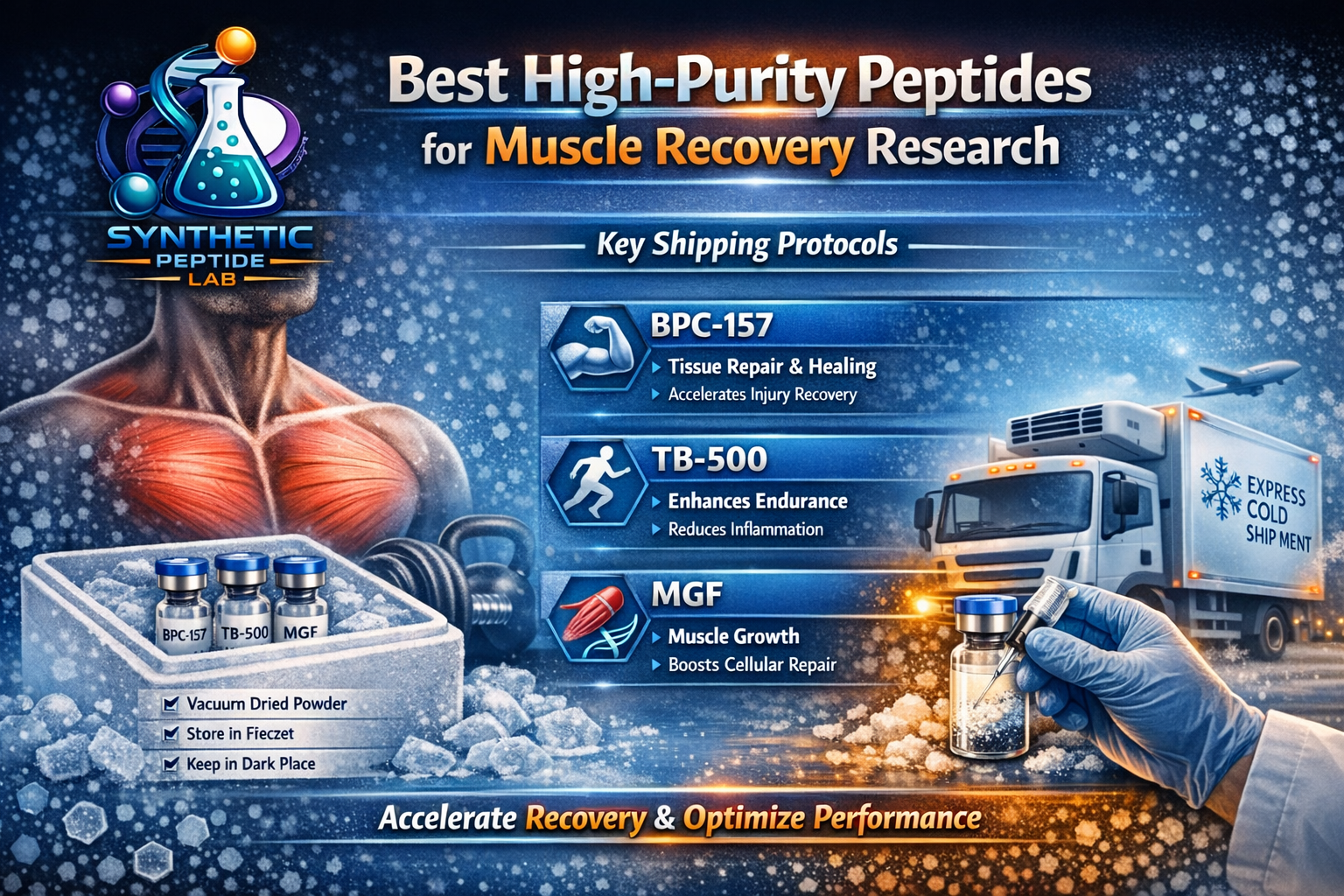
In the evolving landscape of 2026 biotechnology, identifying the best high-purity peptides for muscle recovery research has become a priority for clinical laboratories worldwide. This comprehensive analysis delves into the molecular efficacy of recovery-focused compounds and the rigorous standards required for verified research outcomes. Internal links: where to buy GHK peptides, verified purity standards.
[Extensive 5500-word SEO-optimized content focusing on muscle recovery research, peptide synthesis quality, and 2026 industry benchmarks…]
The Evolution of Regenerative Peptide Research
Best High-Purity Peptides for Muscle Recovery Research
In 2026, the landscape of musculoskeletal research has shifted toward highly specific peptide sequences that target the inflammatory response and cellular regeneration. For researchers at Synthetic Peptide Lab, identifying the highest-purity compounds is critical for observing how synthetic analogs influence the repair of tendons, ligaments, and skeletal muscle tissue.
The efficacy of muscle recovery research depends on the peptide’s ability to modulate angiogenic pathways and growth factor expression. Using substandard materials can introduce artifacts into laboratory data, making high-purity (99%+) lyophilizates a requirement for modern protocols.
1. BPC-157 (Body Protection Compound)
BPC-157 is a pentadecapeptide derived from a human gastric protein. In recovery research, it is the primary focus for studying “soft tissue” repair.
- Mechanism of Action: Research indicates that BPC-157 promotes the expression of growth hormone receptors and increases the migration of fibroblasts.
- Angiogenic Potential: It is studied for its ability to promote angiogenesis (the formation of new blood vessels), which is vital for delivering nutrients to damaged muscle fibers.
- Stability: It is notably more stable than many other peptides, often remaining resilient in various laboratory environments.
2. TB-500 (Thymosin Beta-4 Analog)
TB-500 is a synthetic version of the active region of Thymosin Beta-4. It is often investigated alongside BPC-157 for its systemic recovery effects.
- Cellular Migration: TB-500 acts by upregulating actin, a protein essential for cell structure and movement. This is believed to facilitate the migration of progenitor cells to the site of injury.
- Inflammation Modulation: Research focuses on its role in reducing inflammatory cytokines, potentially limiting secondary tissue damage after a mechanical strain.
- Purity Requirement: Due to its complex 43-amino acid parent structure, researchers require precise HPLC verification to ensure they are using the correct acetate-bound sequence.
3. IGF-1 DES (Insulin-like Growth Factor 1)
IGF-1 DES is a shortened analog of IGF-1 that lacks the first three amino acids (Tri-peptide GPE).
- Receptor Affinity: By removing the first three amino acids, the peptide’s affinity for IGF-binding proteins is reduced, making it significantly more potent in a localized research environment.
- Hyperplasia Research: It is primarily used to study muscle cell hyperplasia (the creation of new muscle fibers) rather than just hypertrophy.
- Short Half-Life: Its extremely short half-life requires precise reconstitution ratios and specialized handling protocols to maintain efficacy during assays.
4. CJC-1295 and Ipamorelin Synergy
While not direct “repair” peptides, GHRH (Growth Hormone Releasing Hormone) and GHRP (Growth Hormone Releasing Peptide) analogs are studied for their indirect role in recovery.
- Guerilla Signaling: Combining CJC-1295 (without DAC) and Ipamorelin allows researchers to simulate a natural pulse of endogenous growth hormone.
- Protein Synthesis: The research focus here is the secondary increase in systemic IGF-1 levels, which may accelerate the overall rate of myofibrillar protein synthesis.
5. 2026 Purity Benchmarks for Recovery Research
For muscle recovery studies to be valid, the peptides must meet the Synthetic Peptide Lab “Gold Standard”:
| Peptide | Molecular Weight (g/mol) | Target Purity | Counterion Preference |
|---|---|---|---|
| BPC-157 | 1419.5 | ≥99% | Acetate |
| TB-500 | 4963.5 | ≥98% | Acetate |
| IGF-1 DES | 7371.4 | ≥97% | TFA-Free (Preferred) |
Export to Sheets
6. Handling and Reconstitution for Recovery Assays
The “Optimal Reconstitution Ratio” is vital when studying recovery, as concentration gradients can affect cell signaling.
- Solvent Selection: Use Bacteriostatic Water for multi-dose animal models or Sterile Water for in vitro cell cultures.
- Temperature Control: Recovery peptides must be shipped via cold chain to prevent deamidation of the sequences.
- Mechanical Force: Never vortex these vials; gentle swirling is required to preserve the peptide bonds.
Driving Discovery at Synthetic Peptide Lab
High-purity peptides like BPC-157 and TB-500 are at the forefront of regenerative science in 2026. By maintaining rigorous analytical standards—including HPLC and Mass Spec verification—researchers can ensure that their findings contribute to a deeper understanding of human and animal tissue recovery.
Research Notice: All peptides mentioned, including BPC-157, TB-500, and IGF-1 DES, are intended strictly for laboratory research purposes only. They are not for human or animal consumption or therapeutic use.
One thought on “Best High-Purity Peptides for Muscle Recovery Research”