

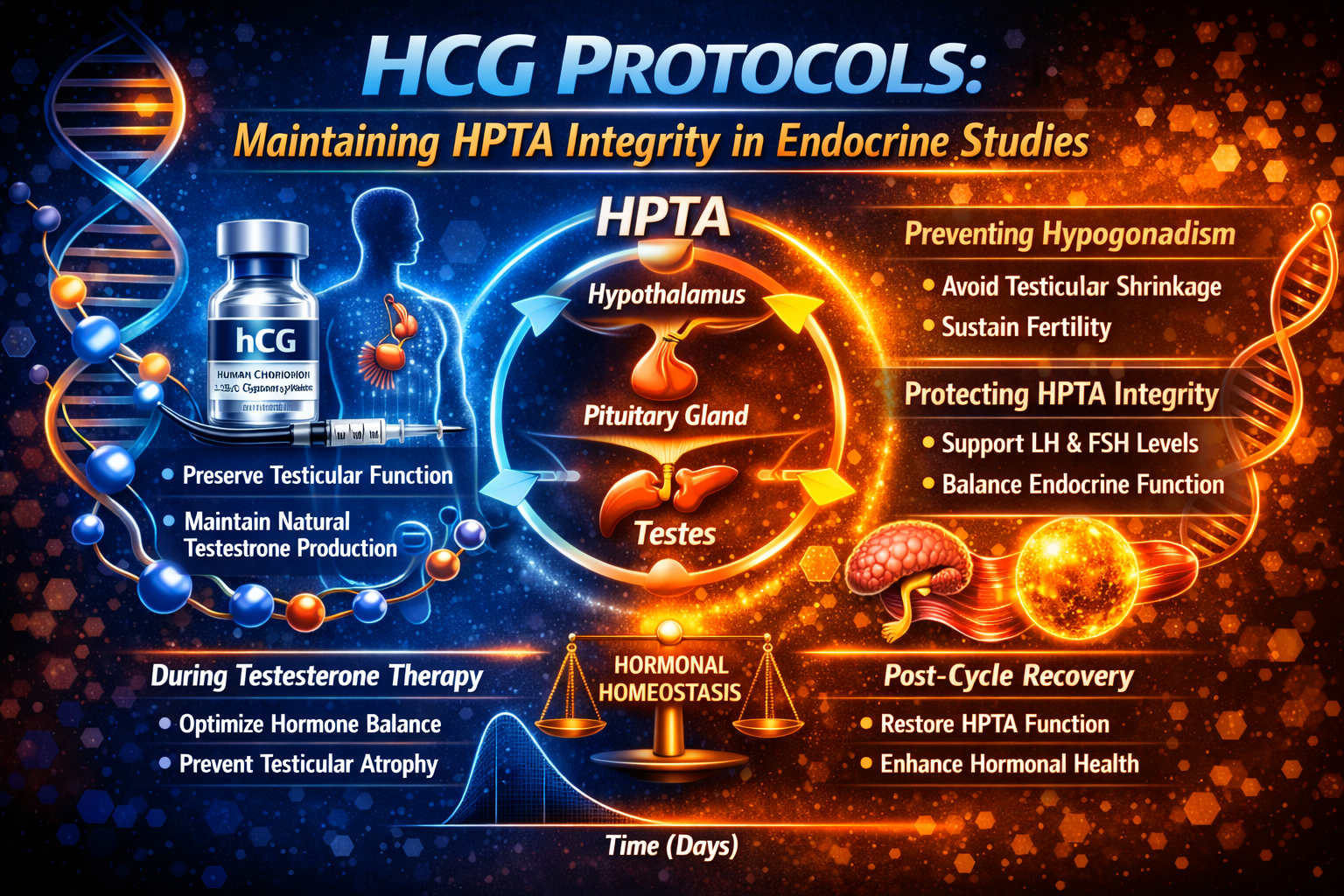
HCG Protocols | Structured Research Overview of Human Chorionic Gonadotropin
Introduction
HCG (Human Chorionic Gonadotropin) protocols are widely discussed in endocrine and reproductive research due to HCG’s role in mimicking luteinizing hormone (LH) and influencing hormonal signaling pathways. In laboratory settings, structured HCG protocols are used to study hormone regulation, gonadal function, and feedback mechanisms within controlled experimental models.
At Synthetic Peptide Lab, we provide high-purity HCG peptides designed strictly for research applications, supporting accurate and reproducible scientific investigations.
What is HCG?
Human Chorionic Gonadotropin (HCG) is a glycoprotein hormone naturally produced during pregnancy. In research contexts, it is used to simulate LH activity due to its similar biological function.
Key Characteristics of HCG
- Mimics luteinizing hormone (LH)
- Stimulates gonadal hormone production in research models
- Interacts with LH receptors
- Plays a role in endocrine signaling studies
Purpose of HCG Protocols in Research
HCG protocols are structured approaches used to study specific hormonal effects and biological responses.
Common Research Objectives
- Investigating testosterone production pathways
- Studying ovarian and testicular function
- Exploring endocrine feedback loops
- Analyzing hormone recovery and regulation models
Protocols allow researchers to control variables such as dosage, frequency, and duration, improving experimental consistency.
Types of HCG Research Protocols
1. Baseline Stimulation Protocols
These protocols are designed to observe how HCG stimulates hormone production under controlled conditions.
Focus Areas:
- LH receptor activation
- Initial hormone response
- Short-term endocrine signaling
2. Maintenance Protocol Models
Used in longer-duration studies to examine sustained hormonal stimulation.
Research Goals:
- Stability of hormone levels over time
- Receptor sensitivity
- Long-term endocrine balance
3. Recovery and Restoration Models
These protocols are used to study how hormonal systems respond after suppression or alteration.
Applications:
- Hormone recovery pathways
- Feedback loop restoration
- Endocrine system adaptability
4. Combination Research Protocols
HCG is often studied alongside other peptides or compounds to explore synergistic effects.
Examples of Combinations in Research:
- HCG with growth hormone-related peptides
- HCG with metabolic peptides
- Multi-hormone interaction studies
Key Variables in HCG Protocol Design
Designing effective HCG protocols requires careful consideration of several factors:
Dosage Parameters
Controlled dosing is essential for observing accurate hormonal responses.
Frequency of Administration
Timing affects how the endocrine system responds to stimulation.
Duration of Study
Short-term vs long-term protocols yield different insights.
Research Model Type
Animal models, in vitro systems, or simulated environments influence outcomes.
Mechanism of Action
HCG functions by binding to LH receptors, triggering downstream hormonal responses.
Biological Effects in Research Models
- Stimulation of testosterone or estrogen production
- Activation of gonadal cells
- Influence on reproductive hormone pathways
This mechanism makes HCG a valuable tool for studying hormonal signaling and reproductive biology.
Applications in Scientific Research
Endocrinology Research
- Hormone regulation studies
- Pituitary-gonadal axis analysis
- Feedback loop investigation
Reproductive Biology
- Gonadal function research
- Fertility-related pathway studies
- Hormonal interaction models
Cellular and Molecular Studies
- Receptor binding analysis
- Signal transduction pathways
- Hormone synthesis mechanisms
Advantages of Structured HCG Protocols
- Improved experimental consistency
- Better control of hormonal variables
- Enhanced reproducibility
- Clear observation of cause-and-effect relationships
Structured protocols are essential for generating reliable and meaningful data.
Storage and Handling Guidelines
To maintain HCG stability:
- Store in a cool, dry environment
- Refrigerate after reconstitution
- Avoid repeated freeze-thaw cycles
- Use sterile laboratory techniques
Proper handling ensures accurate research outcomes.
Why Choose Synthetic Peptide Lab?
When sourcing HCG for research, quality is critical.
Our Advantages
- High-purity research-grade HCG
- Consistent batch quality
- Secure packaging and transport
- Reliable supply for ongoing studies
Synthetic Peptide Lab supports researchers with dependable peptide solutions.
Important Notice
All products are intended strictly for:
Research and laboratory use only.
They are not approved for human consumption or medical use.
Conclusion
HCG protocols play a crucial role in advancing our understanding of endocrine and reproductive systems. By providing structured approaches to hormone stimulation and regulation, these protocols enable researchers to explore complex biological processes with precision.
With high-quality compounds from Synthetic Peptide Lab, scientists can conduct reliable and reproducible studies, contributing to the ongoing evolution of hormone research.