

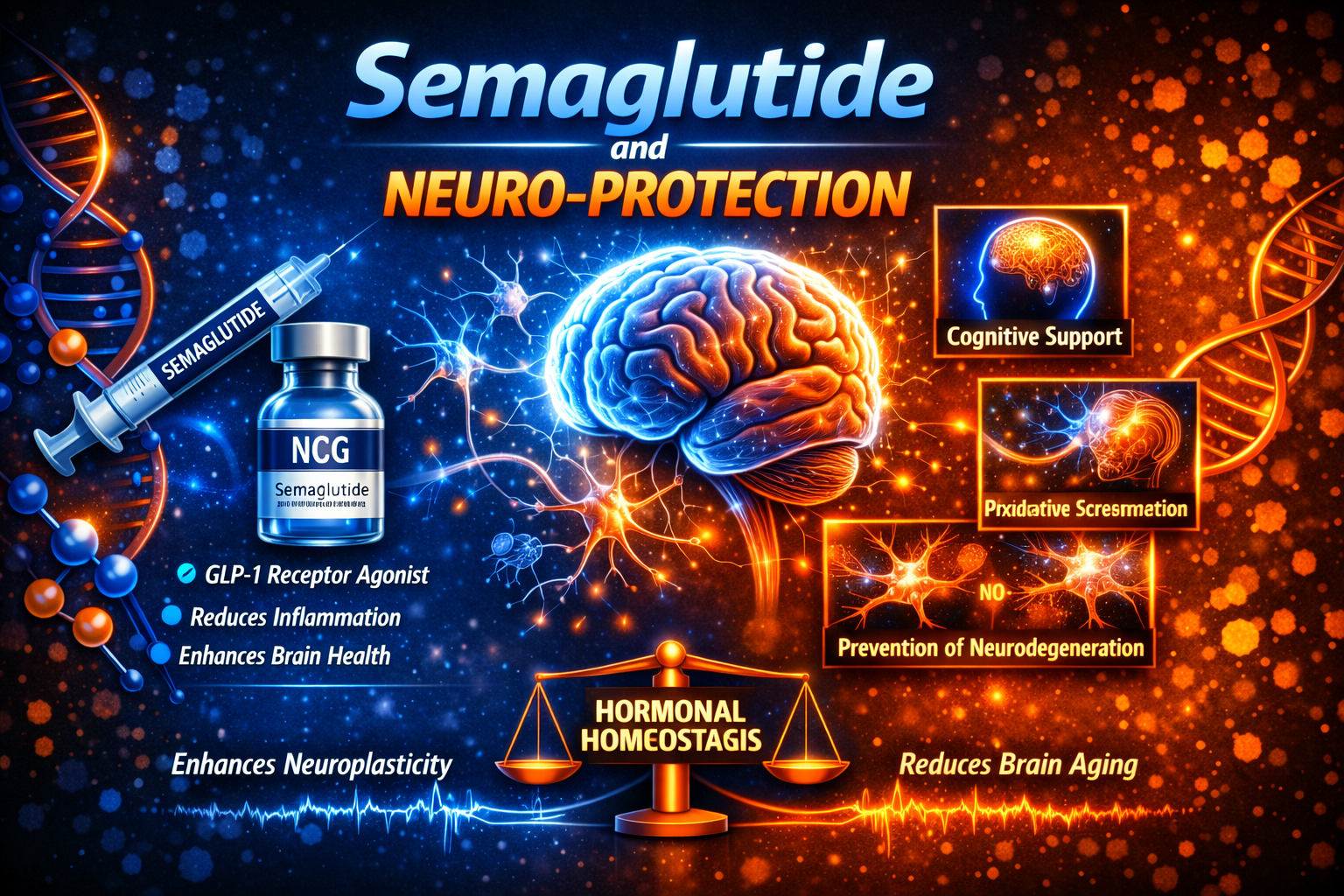
Semaglutide and Neuro-Protection | Advanced Research Insights
Introduction
The intersection between metabolic peptides and neurological research has become one of the most exciting areas in modern science. Among these compounds, Semaglutide—a GLP-1 receptor agonist—has gained increasing attention not only for metabolic pathway studies but also for its potential neuro-protective properties in experimental models.
At Synthetic Peptide Lab, we support cutting-edge research by providing high-purity peptides like Semaglutide, enabling deeper exploration into complex biological systems, including the brain.
What is Semaglutide?
Semaglutide is a synthetic peptide that mimics glucagon-like peptide-1 (GLP-1), a hormone involved in:
- Glucose regulation
- Insulin signaling
- Appetite control
- Energy balance
While initially studied in metabolic contexts, GLP-1 receptors are also found in the central nervous system, opening the door to neurological research applications.
Understanding Neuro-Protection
Neuro-protection refers to mechanisms that protect neurons from:
- Damage
- Degeneration
- Oxidative stress
- Inflammatory processes
Research in this area focuses on preserving neuronal structure and function, particularly in models involving neurodegenerative conditions and cellular stress.
How Semaglutide May Influence Neuro-Protective Pathways
1. GLP-1 Receptor Activation in the Brain
GLP-1 receptors are expressed in several brain regions, including those associated with:
- Learning and memory
- Appetite regulation
- Neuroendocrine signaling
Semaglutide’s ability to activate these receptors makes it a valuable tool for studying brain signaling pathways.
2. Reduction of Oxidative Stress
Oxidative stress is a key factor in neuronal damage.
Research models suggest that GLP-1 receptor activation may:
- Reduce reactive oxygen species (ROS)
- Support cellular antioxidant responses
- Protect neuronal integrity under stress conditions
3. Anti-Inflammatory Effects
Chronic inflammation is linked to many neurological disorders.
Semaglutide is studied for its potential to:
- Modulate inflammatory signaling pathways
- Reduce pro-inflammatory markers
- Support a more balanced cellular environment
4. Support of Neuronal Survival Pathways
Semaglutide may influence intracellular signaling involved in:
- Cell survival
- Apoptosis regulation
- Neurotrophic support
These pathways are essential for maintaining healthy neural networks in research models.
5. Interaction with Insulin Signaling in the Brain
The brain relies on insulin signaling for proper function.
Semaglutide research explores:
- Improved insulin sensitivity in neural tissue
- Enhanced glucose utilization in the brain
- Links between metabolic and cognitive processes
Research Applications
Neurodegenerative Disease Models
Semaglutide is being studied in models related to:
- Cognitive decline
- Neuronal degeneration
- Brain aging processes
Cognitive Function Research
Studies often focus on:
- Memory pathways
- Learning mechanisms
- Synaptic plasticity
Metabolic-Neurological Interactions
Researchers investigate how metabolic health impacts brain function, particularly through GLP-1 signaling.
Mechanistic Overview
Semaglutide’s neuro-protective research relevance is based on its ability to:
- Activate GLP-1 receptors in neural tissue
- Influence intracellular signaling cascades
- Modulate inflammation and oxidative stress
- Support neuronal survival mechanisms
This multi-faceted approach aligns with the growing trend of multi-system peptide research.
Advantages of Semaglutide in Neurological Research
- Long-acting peptide with extended stability
- Ability to cross relevant biological barriers in research models
- Multi-pathway influence (metabolic + neurological)
- Consistent and reproducible effects in controlled studies
Comparison with Other Metabolic Peptides
| Feature | Semaglutide | Tirzepatide | Retatrutide |
|---|---|---|---|
| Receptor Target | GLP-1 | GLP-1 + GIP | GLP-1 + GIP + Glucagon |
| Neuro Focus | Strong | Moderate | Emerging |
| Mechanism Complexity | Moderate | Advanced | Highly Advanced |
Semaglutide remains a primary compound for studying GLP-1–mediated neuro-protective pathways.
Factors Influencing Research Outcomes
- Peptide purity and formulation
- Experimental model design
- Dosage and exposure duration
- Storage and handling conditions
Careful control of these variables is essential for reliable results.
Storage and Handling
To maintain peptide integrity:
- Store in a cool, dry environment
- Refrigerate after reconstitution
- Avoid repeated freeze-thaw cycles
- Use sterile laboratory techniques
Why Choose Synthetic Peptide Lab?
For researchers studying Semaglutide and neuro-protection, sourcing high-quality peptides is critical.
Our Advantages
- High-purity research-grade Semaglutide
- Consistent batch quality
- Secure packaging and delivery
- Reliable supply for ongoing research
Synthetic Peptide Lab is committed to supporting advanced scientific exploration.
Natural keyword integration ensures strong search visibility while maintaining authority and readability.
The 2026 research landscape for Semaglutide has expanded beyond simple weight loss into the territory of neuro-protection. This study reviews the current data on GLP-1 analogs and their impact on neuro-inflammatory pathways.
Beyond the Gut: GLP-1 in the Brain
Semaglutide’s ability to cross the blood-brain barrier has opened new doors for cognitive research. By reducing microglial activation, it is being studied for its potential to slow the progression of neuro-degenerative models. Researchers can buy Semaglutide to explore these secondary therapeutic pathways.
Important Notice
All compounds are intended strictly for:
Research and laboratory use only.
They are not approved for human consumption or clinical use.
Conclusion
The study of Semaglutide and neuro-protection represents a powerful convergence of metabolic and neurological research. By activating GLP-1 receptors in the brain and influencing key cellular pathways, Semaglutide offers researchers a valuable tool for exploring how metabolic signals impact neuronal health.
As scientific interest in this field continues to grow, Semaglutide stands out as a key compound in advancing our understanding of brain function, cellular protection, and system-wide biological interactions.
With high-quality peptides from Synthetic Peptide Lab, researchers can confidently investigate these complex mechanisms and contribute to the future of neuro-metabolic science.
One thought on “Semaglutide and Neuro-Protection: 2026 Research into GLP-1 Brain Signaling”